Friday, July 8, 2011

Ongoing Slovenia

Day 2 of the Slovenian experience began with a little work on the farm. I rode on the back of the tractor Andrej was driving to their other plot of land where we were going to cut and pick up grass for the cows. During the summer they are cutting and picking up grass nonstop all over their farm to store for the cows to eat during the winter. Cutting grass had never been such a time consuming and complex thing to me until now.

Plowing a plot of grass:

First, use the cutting tractor to cut it down. Then, drive the next tractor, which helps to place all the chopped grass in nice rows. Then, drive the third tractor, which is pulling a big carriage, to pick up all the cut grass which is now in rows. Since the field are so big, this takes time. And since we had some additional people on hand, aside from taking some trys at the tractor, Mark Brecht and I were able to also rake some stray grass into the lines which helps to do a much more thorough job. Being allergic to grass, my eyes were itching like a mosquito bite on your butt. And a nice itchy throat. I had to rinse my face thoroughly after this session. Guess I wasn’t cut out to be a grass cutting farmer!

Andrej taking charge on grass management:


Andrej & his dad most likely chatting about grass and tractors:
Andrej supervises Mark on the tractor, Brecht is a great raker in the distance:


After packing our bags into the car we headed out on our seemingly weeklong Slovenian road with Andrej in the cockpit. Andrej seemed to know his country like the back of his hand, amazing since it is filled with small and windy roads just about everywhere (one main highway goes N-S and E-W, that's about it). The first stop was Andrej’s families church, sitting atop a mountain like a Walt Disney movie, with goats walking around and ridiculous views.


Then the Belgian, Brecht, naturally made the executive call that he wanted to visit a Slovenian brewery. So it was decided. Slovenia only has 2 big beers basically, but they have a very small handful of microbrews which are not so widely available. We arrived before lunch, had a pint, and the bartender personally phone the brew master up for a personal tour. The brew master was really friendly. He understood English but only spoke a little. He showed and explained us his processes, and it was decent, light beer. It was interesting to hear about why there are so few Slovenian microbreweries, because with the waterfall of taxes from different places, in the end, he basically can barely break even. He said he will probably have to close his brewery soon because of it. Of course he was extra hospitable and gave us large samples of every beer as we chatted about the brewing process and even Slovenia and the US (his sons play American football!)


The fermenters:


We spent the rest of that day and night in the capital, Ljubljana. It is a nice city, but I believe the real beauty of Slovenia is all outside Ljubljana. However we visited their castle on the top of a hill, bought some hand-made vanilla bath soap (I’ll be smelling fresh and feeling wide awake for a month now!), browsed the fruit market, and ran into about 5 or 6 of Andrej’s friends here and there. Andrej seemed to know someone everywhere he went since he worked 11 or 12 jobs in different parts of the country before the program.

View from the castle:

A main square;


Watching the sunset from a surrounding hill:


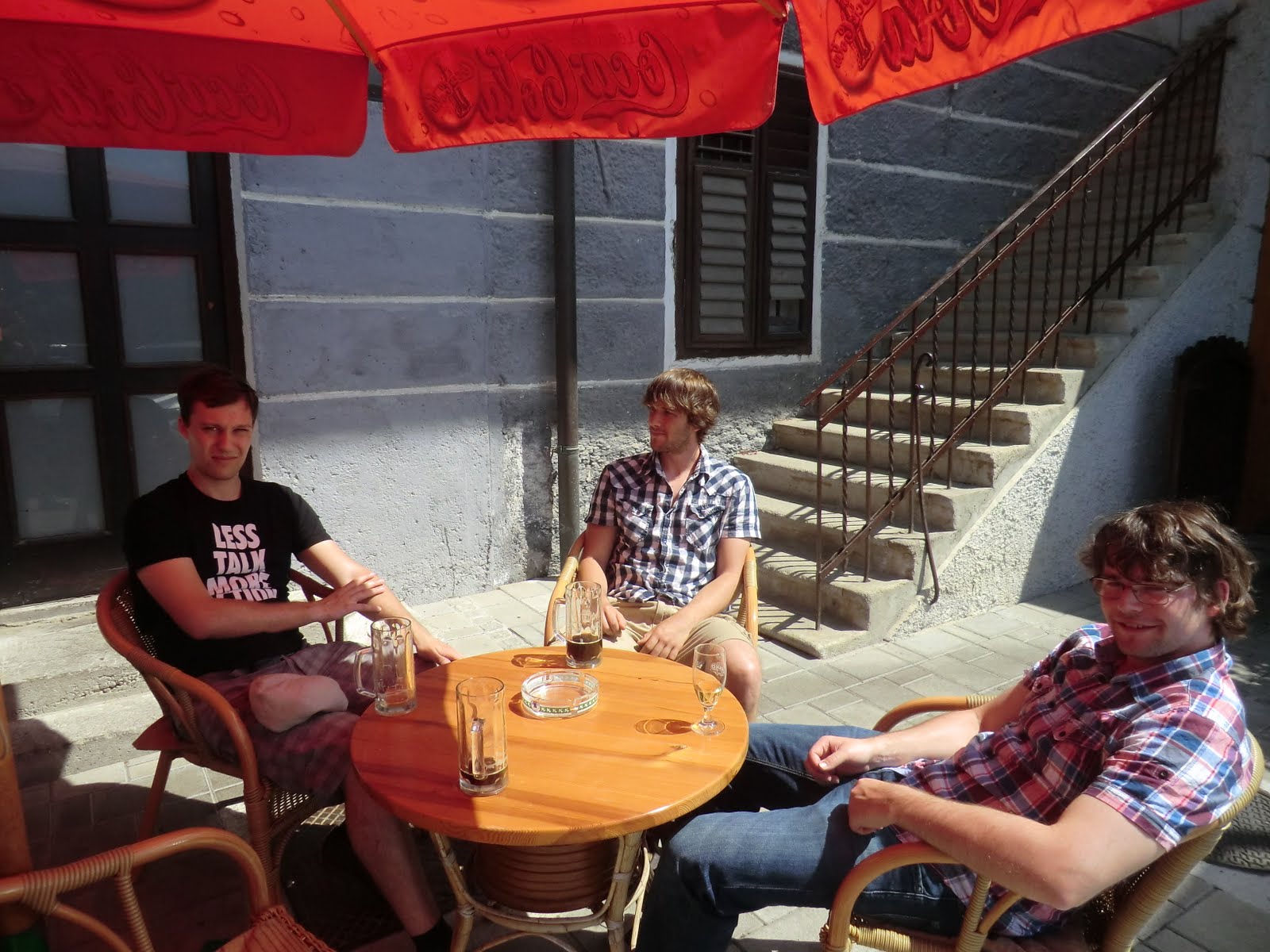
We spent the night having a few beers outside in a plaza of the bohemian area of Ljubljana. Just lots of people hanging out and relaxing. While we were about to drive home, we ran into four or five more of Andrej’s friends. Since everyone was just having a grand old time, we didn’t head back until 5am, after stopping in and having another Serbian delight called Burek, the name of which escapes me know. Basically fried pastry dough filled with meat or cheese. So anyways, the 6am ending to the first day was just the beginning of the Slovenian marathon-week.

http://en.wikipedia.org/wiki/Burek

Slovenia the Great, the Beginning

So after leaving Berlin I had a half day stopover in Zagreb before heading to Slovenia to meet my classmate Andrej. Zagreb seemed like a small but nice capital city, surrounded by mountains and with lots of green areas. I don’t have much else to say about it except here are a few pictures.


Andrej met me at the train station of his town, Zagorje, with two other classmates Mark (Canada), and Brecht (Belgium). The 1.5 hour ride from Zagreb was a good introduction to what the majority of Slovenia is like. Beautiful mountains filled with lakes, rivers, windy roads, mountains side farms (including vineyards), Yosemite-like terrain, and generally one of the most beautiful landscapes I have seen.


We moved onto Andrej’s families farm and his awesome and hilarious dad greeted us with a barbecue and proper Slovenian food. In general that implies meat, more meat, potatoes, more potatoes, and some salad. One of the grillables include a typical Serbian/Bosnian pork sausage called cevapcici, which is also popular in other former Yugoslavian countries like Croatia and Slovenia.


Following dinner I had my turn with the cows. They have 14 cows on the farm, which they feed primarily grass but also a little corn that they are growing and drying on their land. First I fed the lone calf, filling up the wine bottle with it’s mom’s milk and letting it gulp it down immediately. Then I proceeded to have Andrej’s mom show me how to milk the cows. No problems there. Talk to it a bit, hit it on the side, and proceed milking into the pan. They milk 5 of the 14 cows twice a day, in the morning and evening. So the family has fresh milk daily. Then, I proceeded with the shit shoveling, which must be done daily also. Let me say, 14 cows create a lot of shit! I split the work with Brecht and we each filled about 3 or 4 wheelbarrows which probably consisted of only about half of the day’s poop.

Feeding the calf:


Milking under supervision:

Scooping the poop into wheelbarrow and removing:


They also have a big chicken coop. They just keep the chickens for eggs. Plus 3 pigs, which they use for pork (they make and dry their own sausage which was phenomenal). Then they have lots of random fruit trees over their land. Cherry, walnut, apple, pear, and so on, so they are having fresh fruit many times throughout the year. Then they are also growing lots of lettuce, tomatoes, green/regular onions, herbs, peppers, and a variety of other vegetables. Plus they have a bee house and make their own honey. This in addition to the 6 lounging cats and dog make it quite the full farm! And it is in a truly breathtaking setting in the middle of the mountains. Andrej said his dad rebuilt their house when he inherited it but it has been in the family for 6 generations. They have a wood burning stove which they are filling each time they cook. They distill their own schnapps. They are growing wheat which after cutting they send out to be milled, then they make bread regularly. Let me say, being used to crappy white bread, that stuff is dense! 1 or two pieces and you are full. Even they say most Slovenian farmers aren’t doing it this way anymore, his dad just really enjoys it.
Hanging and drying corn:
One of the wheat fields:

Chicken Coop:

The view of their house and barns from the top of one of their hills:


The hilarity of the entire time on his farm was that his dad thought I was way too skinny and wanted me to get bigger by the time I left. I would sit next to him, he would scoop my portions (which would be massive for what I am used to), then say ‘repete!’ at the end, for repeat. I definitely say that by the end my appetite had expanded. Definitely faaaaaar from hungry at the end of each meal. And communicating with papa Cebela was hilarious and done mostly by hand gestures or through translations by Andrej or his siblings. By the end Mark & Brecht & I had learned the basic phrases like thank you, good morning, etc. On the day we left he gave Mark & I hats and coin pouches. It was truly enjoyable and relaxing there and the hospitality was overwhelming. Andrej even clothed me before I left since they seemed to have hundreds of extra shirts lying around and I now am the owner of 3 new (used) Slovenian shirts! Haha…

The day's milk (after boiled the layer of cream forming on top is used in the coffee... never had 'real' cream but it is a unique and strange texture).

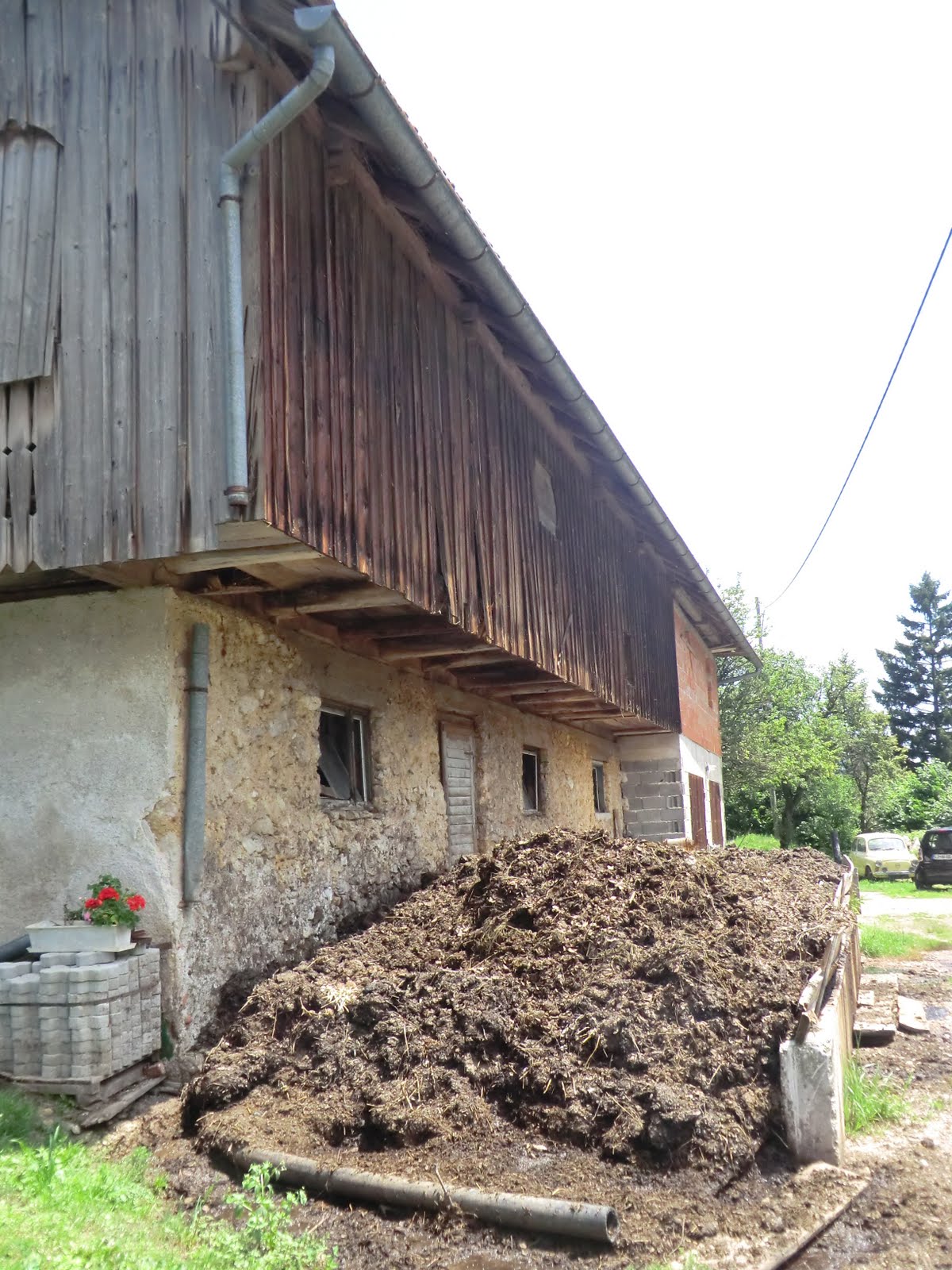
Where the poop is stored to be used for fertilizer:

The bee house:


The main barn storing some tractors, 14 cows (feeding holes on the side), 3 pigs, the upper half storing grass for the winter, and in the back Andrej's brother has a shop where he repairs smart cars::

Monday, July 4, 2011

KGB Prison Vilnius


So, while I was well aware of the atrocities committed by the Nazis during WWII, one thing I was not as aware of, however, was the extent of the atrocities committed by the Soviets around Eastern Europe when after WWII they began to occupy many of the countries now considered former soviet republics.

The KGB prison in Vilnius, Lithuania was used in WWII by the Nazis but after the Germans left was occupied by the Soviet KGB. The prison was actually used continually from the end of the war until the Soviet’s were pushed out of Lithuania 1990. Probably the heaviest and most brutal use of the prison was started right after the war until 1953 when Stalin was put out of power. The prison during the entire duration was used to house those who were considered problematic in opposing the communist regime.

Until 1953, some of the torturing and techniques they used were horrendous. There was a lightless room where some people were put for a month in which they were left in their underwear at any time of the year for weeks and fed only piece of bread and a glass of water a day. It loosened up a little after Stalin, but before, the exercise regime for the prisoners consisted of walking in a circle outside for 15 minutes a day, with no talking allowed. In some crowded cells, prisoners were not allowed to touch the walls. One of the torture cells consisted of an empty room with a small concrete pillar in the middle. The room floor was filled with ice and subjects had to stand on top of this tiny concrete pillar just as wide as their feet for days or risk standing on ice. A particularly horrible practice under Stalin was to take dead bodies from the prison and place them in public places in towns to scare relatives and friends into obedience. The prison had a small library, but there are no records of it ever being used to loan books to prisoners.

The cell with the pillar to stand on:


Pictures of bodies placed in towns:


Although policies became less strict (relatively speaking) leading up until 1990, the prison was still used for the entire duration as a center for monitoring all civilians. In general, everyone was watched. Special equipment was used to tap phone calls and the original monitoring rooms were display at the museum. In theory the KGB had to get permission to monitor someone, but in practice nothing was required. Those who were thought to be ‘hostile elements’ to the Soviet system for organizing protests, farmers failing to fulfill their requirements, those who talked negatively about those in power, even at times those who told jokes about the Soviets were registered and then possibly arrested by the KGB. Reasonable arrests were ‘betrayal of the motherland’ or ‘counterrevolutionary activities’ and ‘sabotage’. Sentences were generally 5, 10, or 25 years. Over 200,00 Lithuanians were arrested, interrogated, and imprisoned from 1944-1990 and over 70,000 people died in either the prison, through deportation, or for being a supporter of the opposition. It is pretty amazing to think that all this occurred, probably in all the other republics as well, until about 20 years ago. And the fact that it came immediately after WWII in which 240,000 Lithuanians were killed puts them at close to 50 years of continuous occupation and hardship. Young Lithuanians probably have a lot to be proud of to have grown up in an more or less independent Lithuania.

Pleasant thoughts.

Molotov cocktail:


Padded room:


Sunday, July 3, 2011

The Holiest Day of my Life

Warsaw was a surprisingly interesting city and I guess I’ll have to paint the picture as I saw it, which is probably not the everyday Warsaw my classmate Marta pointed out.

Poland is a pretty Catholic country. That I knew before arriving. Our good buddy John Paul was Polish. Apparently it has the highest church attendance of any country in Europe. So, it was fitting that the one days I had in Warsaw was the yearly national church holiday. For this day, almost all businesses except restaurants in tourist areas and souvenir shops close. So basically all workers have the day off. Plus basic places such as supermarkets close, and even every museum in the city shuts down. So we weren’t expecting much except to just walk around in the streets. But in the end I think this was one of the most interesting days of the 2 week trip.

Warsaw has a ton of churches. So while walking around in the morning, every church we passed seemed to be full and in service. Then around 11 am we heard singing in one of the main streets, and came upon a few thousand people watching and participating in a public benediction and mass. I thought it was pretty impressive. There were speakers in the streets and the entire crowd joined in. At the front were some choir boys singing, and an altar.

We watched the mass for about 10 minutes then proceeded to exit through the mass of people (zing!). It was evident that the majority of the people in the crowd were at least a generation older than I if not in their 70s and 80s.

A link to a video of the mass:
http://www.youtube.com/watch?v=ykhdkCwLBv8&feature=youtu.be


Walking around with Marta later, she said she hoped I didn’t get the impression that Poland was some nutty religious place. It was hard not to get that impression though, from the events that day. Throughout the day, nuns were seen everywhere, a few more smaller public masses were seen (one was even a moving mass!), and groups of religiously garbed people walked around carrying jesus banners, church-like onnings, and other stuff was seen frequently.

Nonetheless, I thought it was a very unique and cool experience to see in Warsaw instead of the typical museum-church walking tour. A bit more interaction with the people and culture of the city.


Bigos and a Tyski. Not a bad meal:
The Soviet's monolithic 'gift' to the Polish, of which they would prefer to cover up with skyscrapers:

Martusia & I in one of the main squares of Warsaw:


PJP:


Nice new trams:


The memorial outside the Warsaw Uprising museum:


Ah, Pierogis: