Showing posts with label Ethiopia. Show all posts

Saturday, December 17, 2011

Ethiopian Food Huzzahh!!!!!

One of the things I was most looking forward to in visiting Ethiopia was the FOOD. I tried it in the US, and as a result all I knew about it was there was some spongy like bread (Injera), communal style eating, strong coffee, and maybe some raw meat involved. However it was really amazing to experience non-Americanized Ethiopian food first hand. Let me say, I successfully endured the notorious fire-like spice that is dumped on everything, called berbere, albeit with only a little burn. And all the while never had to use silverware to eat in 2 weeks, a first for me! 

In Addis Ababa I got to experience eating out at restaurants of varying quality for a week, the best being in an unfinished, uninsulated building with poker games going on in the majority of the room and with welding and steel cutting operations taking place nearly within spitting distance (luckily the sparks didn't make it into the food)...the price was accordingly dirt cheap but the taste was unexpectedly high. While in Bahir Dar and Gondar I experienced real, traditional cooking from Netsanet's wife (Sanit), and Sanit's aunt. I must admit, although amazingly delicious, it did get a bit tiring to eat injera 3 times a day for two straight weeks. Product of a melting pot society in the US with a simply amazing variety of choice. However, it does not detract from the fact that Ethiopia  definitely has food deeply rooted in it's culture. From sharing off of the same plate (I had to learn to eat fast so I kept up with everyone and wasn't left with just a few bites), to feeding each other, to preparing very particular foods which are lovingly prepared and having a coffee ceremony when guests are invited over. I also experienced a kindness not seen in so many other places, always being urged to eat more and really make sure I was full. In my opinion we don't really treat guests like that, at least to such an extent, in the US. 

And aside from the meals, they have a fairly limited but phenomenal selection of fruits. I mean, the bananas I tasted there blew any bananas out of the water that I have ever tasted by a nearly a googoleplex (an official number, by the way). The mangoes, papayas, and a maracuya like fruit were all full of flavor (probably thanks in part to the fact that what we call 'organic' fruit is miraculously actually just 'normal' food here) The only fruit they seemed to import was apples, which were priced at 5 times any other fruit (even higher than European or US prices for apples!). It is in part to tasting such great and natural fruit in Ethiopia and places like Serbia that I have started to move away from buying the bland, seemingly perfect yet chemically laden garbage that fills most supermarkets, gravitating toward a great Sunday market in Gent with a guy who grows his produce and vegetables just outside the city and tastes fabulous. Also, since many people do not have refrigeration, they use a butter that can be stored at room temps. It has a rancid smell to it but once cooked is great. Oh, and I don't know where this reputation of Ethiopians being skinnier than everyone else comes from, but I must say I didn't see anything out of the norm.

PS. Average price of meal out for 3 people: $2-4!

http://en.wikipedia.org/wiki/Berbere

On to the pictures of yumminess:

:
Sanit cooks shiro. Bet you can't say you've ever had that setup as your main means of cooking (and cooked a bad ass meal at the same time!). Time to be slightly humbled.

I already blogged on this...but here we are with our recently purchased goat.

MAAANNNNGO

Sanit barraged by the goat herd being shuttled to the market
This guy is showing me Khat directly from the source. It basically has a similar effect as a jolt of coffee. Guess what, it is banned in the US, Canada, and some places in Europe. Fairly common here though http://en.wikipedia.org/wiki/Khat
You are officially a winner if you cook a spectacular meal in this kitchen.

A market in Bahir Dar. Spice & Beans section.

Unroasted coffee beans (the only way it's sold)

injera with some fried chicken and rice. Dang, that was a good meal

A spice stall at the market.
Chuchu's mom makes injera in this every 3 or 4 days, which takes 3 days and last about the same amount of time. If you don't make it yourself, most people seem to buy it fresh every day or two.

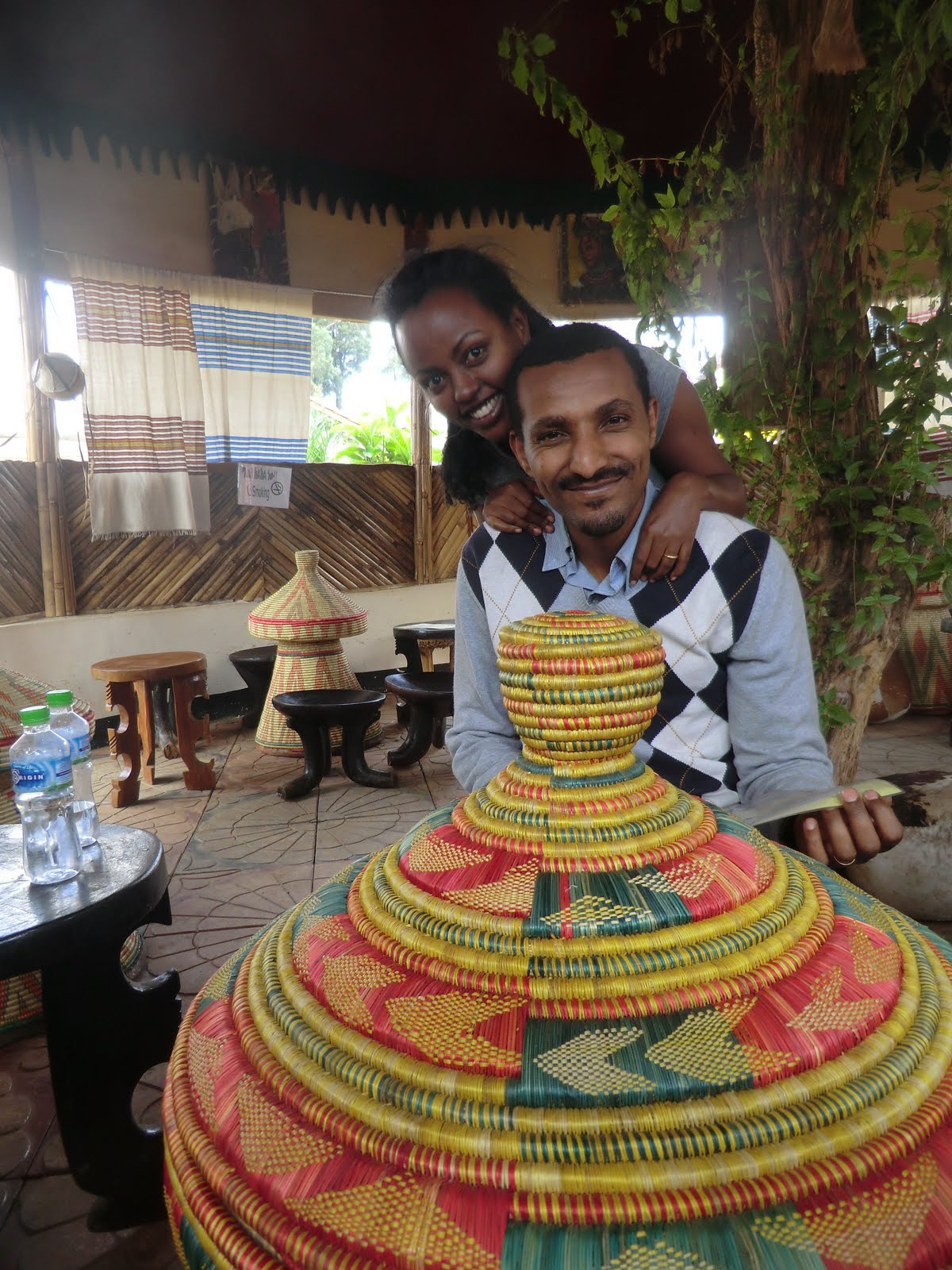
Basket for storing injera.

Another spread of things.

Freshly made juice! Banana, Mango, and Avocado mixture.

The liquidy stuff is shiro, a staple made from ground beans.

Another good one.


Sanit buying some fruits.

Forget what this was...Looks cool though.

I think this is Bayanet - a tray with a mix of prepared foods on it served over (and with!) injera

Chicken Wat - A traditional recipe (made by Sanit's friend's family when the invited me over as as a guest). They had to buy a live chicken that day to make this, so it was a big deal. Lots of preparation goes into it. Hours of boiling. DELICIOUS.

Roasting coffee beans

First Meal in Ethiopia!

 Firfir (chopped up and cooked injera, or what I jokingly refer to as eating Injera with more Injera)

Tibs, I think?


 My first coffee! Roasting the beans, like usual. Let's just say neither instant coffee nor Starbucks exists or is sufficient here.
Brilliant Coffee. 3 cups for coffee ceremony
Netsanet debates whether to buy one of this guys chickens
Dinner is Served

 This is a very common grain/snack. The runners eat it. So do the monks.  

Saturday, November 12, 2011

Breathtaking

I’ve been on a lot of pretty spectacular bus rides the past few years, and some of them are pretty hard to compare with each other with such varying geography, but the 10 hour bus ride in Ethiopia from Addis-Ababa to Bahir Dar just might have been the most impressive of all, not only for the jaw dropping scenery almost the entire journey, but also the small towns, villages, and glimpses of rural life through which the route took.

The bus went through deep gorges along the blue Nile, valleys, massive high plateaus, rolling hills, and mountains, all which were extremely lush and green, almost jungle-like at times, with the occasional towering cliff covered in trees and shrubs. What was not covered in greens showed up as dark oranges and coppers in the bright soil. At one point in the trip we were miraculously looking at the clouds from above, then after a windy descent, looking up at them. Hundreds, even thousands of types of trees dot the landscape, some types of which I’ve certainly never encountered before. A seemingly endless of supply of rivers cutting through the land along the way plus a plethora of waterfalls, most likely all feeding the Nile. In the plateaus, with lots of farming, the irrigation channels these people have built look like they’ve been honed with expertise to efficiently catch and direct all the rain water (all of course made with simple hand tools). And the bus driver must have spent at least half of the 10 hour trip honking, as the entire journey was rural and thus filled with donkeys, ox, goats, and cows and their herders shepherding them along the road. I even saw baboons sitting on the side of the road a few times!

Blue Nile:


Women with massive woven baskets on their backs on the road or meandering amongst plants and trees in the hills, carrying things on their head, everyone with a huge walking stick, thatch buildings, this is true rural life that seems in many ways to have remained changed for hundreds of years. Some of the villages had electrical lines, but some didn’t. At one point, I saw about 15 guys putting up giant electrical pole (with no machines!). 7 or 8 of them were in a line on one side, pushing it above their heads as high as they could, then 6 or 7 on the other side with ropes tied to the end of the pole, pulling. Just like that show on the discovery channel where they are simulating erecting the blocks at Stonehenge. Plenty of men and women just standing there or sitting on a rock, with their sticks, passing the day by observing the occasional traffic and the beautiful mountain scenery. Of course, if they were wearing jeans and t-shirts, it wouldn’t be as eye-opening, but everyone wears traditional clothes. Mostly which amounts to (for men) a giant blanket wrapped over the shoulders, covering most of their arms, and coming down below their waist and a pair of shorts, often in greens and browns, with either sandals or no shoes.

Watching us:


Our two stops included first a bathroom break, in which the bus simply stopped in the middle of the road and everyone proceeded to go into the bushes to do their business. The second was in a small town for lunch. Needless to stay I stuck out like nobody's business in this town, like an alien from Mars. After lunch, I followed my bus-seat neighbor (ironically an Ethiopian who was a taxi driver in Las Vegas the last 6 years, really really nice & friendly guy), and bought a branch of a tree to clean my teeth from a little boy for a few cents.

Time for a bathroom break:


Purchasing my tooth cleaning apparatus:


In summary, outside of the capital, Ethiopia immediately becomes a stunning explosion of colors, plants, animals, people, mountains, rock formations, gushing rivers, and tranquil earthen cut streams. Incredible.


Sanit & Netsanet at lunch:

Herding the cows across the water:

Turning from mountains into an incredible plateau:


Houses:

Orthodox Churches amongst the trees:


Passing a village:


Squatting, passing the day:

Above the clouds:

Sunday, October 9, 2011

Eating with Style

Netsanet jokes that if you have a really good friend in Ethiopia, you may never need to do any of the work to feed yourself.

I experienced this one evening when going out to dinner with Netsi, Sanit, and one of their friends in Bahir Dar. As a guest, she decided to feed me, making huge scoops of injera and placing them into my gaping and patiently awaiting mouth. Just sit tight and wait for them to do all the work!

Saturday, September 24, 2011

Blue Nile Orthodox Monasteries


The Nile River begins in Lake Tana in Ethiopia, one of the largest fresh water lakes in Africa. In Lake Tana there are four islands, all containing Orthodox monasteries. These are very important historical sites in Ethiopia’s history, and many of the kings have visited them or have stayed on the islands at times in history. The people living in these monasteries have dedicated their lives to God and there is no looking back. I took a boat ride with Netsanet to check them out.

The first one was a female monastery. There are only a few men living on this island, as they must administer the services. This monastery has been here since the 1300s, and it doesn’t seem like life has changed much at all, save that they have more income in the last 10 years due to tourism (which probably has altered their lifestyle). The island is beautiful and more or less is what the landscape should look like. On this island there is a structure that leads to a cave, and during Easter a bunch of them go in and for 50 days they stay, without light, and eat once a day a handful of what amount to some nuts. Otherwise, the rest of the year, they eat one meal per day at 4pm, containing no meat products. Mostly just injera, and maybe some fruits.

Being guided by a female monk up the island:


The view you get when you become a monk on this island:


The second monastery was the neighboring island which is all male. Females today are still not allowed to enter pass the dock. The monks consider it impure to view females. This monastery was founded in 1313. We were guided by one of the monks, who was actually quite friendly and even smiled (another Ethiopian on the tour explained that most monks don’t want to talk to tourists at all, but this one has adjusted as he accommodates the tourists asking lots of questions and being friendly). On the way down, we passed one monk who lowered his head and hid himself as he walked by, indicating he did not want to talk. They have built a tiny museum on the island, filled with all the original texts (written on goat skin), and even the original cross of the founding monk from 1313. Many kings throughout time have also given crowns as gifts to the monastery. On this island, there are about 80 monks. Some of them actually go to the mainland during the day to work. They consider all the property of the island, and any income generated by tourism, as property of the Orthodox Church (communism eh?). On the island I saw monks amongst the trees in various places studying the Bible or other religious texts. Others, just sitting and passing the day.

Approaching the male monastery by boat:


Massive doors on the church!


Ringing the bells from the 1600s. Different rings give the monks different cues:

The original cross from the founder of the male monastery, from the 1300s.


Waters were rough enough to have to wait 30 minutes before heading back out!:

The third island was a flat one, very marsh like. This island is essentially at the inlet between Lake Tana and the beginning of the Nile river. By this time, I was monked out and decided not to enter the monastery (the tourist price is 5x the Ethiopian price). But here, there are also normal people living on the island. They are growing fruit and selling it back on the main land. Bananas, papayas, mangos, etc. Plus chat, coffee, cabbage, corn and other. They also fish still in traditional style boats. We tried some bananas, they were incredible, no comparison to the bananas we get in the US or here in Europe. And picked a few coffee beans to try, as well as some chat, which is bitter and disgusting (and basically is just like coffee but closer to espresso).

Spotted this guy, look at his canoe!


A coffee bean (with the skin still on):


Massive mangoes!


Our new friend from Addis picking some chat for us to try: