
Showing posts with label Bahir Dar. Show all posts
Showing posts with label Bahir Dar. Show all posts
Sunday, November 27, 2011
Entrepeneurs
Ethiopia is full of entrepreneurs. From the guys lined up on the streets shining your shoes (they are usually merely kids or young men, often living in groups in shanties and saving money to hopefully open a business some day), to those placing their weigh scales on the street. Unless you are rich, it is not practical to buy a scale for your personal use. That attitude seems sensible enough. We passed 3 or 4 scales in a couple blocks, choosing the one that appeared to have the best combination of actually being calibrated and having a low price. That's the difference between weighing yourself for the equivalent of 1 cent to 2 cents!


Saturday, November 12, 2011
Breathtaking
I’ve been on a lot of pretty spectacular bus rides the past few years, and some of them are pretty hard to compare with each other with such varying geography, but the 10 hour bus ride in Ethiopia from Addis-Ababa to Bahir Dar just might have been the most impressive of all, not only for the jaw dropping scenery almost the entire journey, but also the small towns, villages, and glimpses of rural life through which the route took.
The bus went through deep gorges along the blue Nile, valleys, massive high plateaus, rolling hills, and mountains, all which were extremely lush and green, almost jungle-like at times, with the occasional towering cliff covered in trees and shrubs. What was not covered in greens showed up as dark oranges and coppers in the bright soil. At one point in the trip we were miraculously looking at the clouds from above, then after a windy descent, looking up at them. Hundreds, even thousands of types of trees dot the landscape, some types of which I’ve certainly never encountered before. A seemingly endless of supply of rivers cutting through the land along the way plus a plethora of waterfalls, most likely all feeding the Nile. In the plateaus, with lots of farming, the irrigation channels these people have built look like they’ve been honed with expertise to efficiently catch and direct all the rain water (all of course made with simple hand tools). And the bus driver must have spent at least half of the 10 hour trip honking, as the entire journey was rural and thus filled with donkeys, ox, goats, and cows and their herders shepherding them along the road. I even saw baboons sitting on the side of the road a few times!
Blue Nile:

Women with massive woven baskets on their backs on the road or meandering amongst plants and trees in the hills, carrying things on their head, everyone with a huge walking stick, thatch buildings, this is true rural life that seems in many ways to have remained changed for hundreds of years. Some of the villages had electrical lines, but some didn’t. At one point, I saw about 15 guys putting up giant electrical pole (with no machines!). 7 or 8 of them were in a line on one side, pushing it above their heads as high as they could, then 6 or 7 on the other side with ropes tied to the end of the pole, pulling. Just like that show on the discovery channel where they are simulating erecting the blocks at Stonehenge. Plenty of men and women just standing there or sitting on a rock, with their sticks, passing the day by observing the occasional traffic and the beautiful mountain scenery. Of course, if they were wearing jeans and t-shirts, it wouldn’t be as eye-opening, but everyone wears traditional clothes. Mostly which amounts to (for men) a giant blanket wrapped over the shoulders, covering most of their arms, and coming down below their waist and a pair of shorts, often in greens and browns, with either sandals or no shoes.
Watching us:

Our two stops included first a bathroom break, in which the bus simply stopped in the middle of the road and everyone proceeded to go into the bushes to do their business. The second was in a small town for lunch. Needless to stay I stuck out like nobody's business in this town, like an alien from Mars. After lunch, I followed my bus-seat neighbor (ironically an Ethiopian who was a taxi driver in Las Vegas the last 6 years, really really nice & friendly guy), and bought a branch of a tree to clean my teeth from a little boy for a few cents.
Time for a bathroom break:

Purchasing my tooth cleaning apparatus:

In summary, outside of the capital, Ethiopia immediately becomes a stunning explosion of colors, plants, animals, people, mountains, rock formations, gushing rivers, and tranquil earthen cut streams. Incredible.
Sanit & Netsanet at lunch:

Herding the cows across the water:

Turning from mountains into an incredible plateau:

Houses:

Orthodox Churches amongst the trees:


Passing a village:

Squatting, passing the day:

Above the clouds:


The bus went through deep gorges along the blue Nile, valleys, massive high plateaus, rolling hills, and mountains, all which were extremely lush and green, almost jungle-like at times, with the occasional towering cliff covered in trees and shrubs. What was not covered in greens showed up as dark oranges and coppers in the bright soil. At one point in the trip we were miraculously looking at the clouds from above, then after a windy descent, looking up at them. Hundreds, even thousands of types of trees dot the landscape, some types of which I’ve certainly never encountered before. A seemingly endless of supply of rivers cutting through the land along the way plus a plethora of waterfalls, most likely all feeding the Nile. In the plateaus, with lots of farming, the irrigation channels these people have built look like they’ve been honed with expertise to efficiently catch and direct all the rain water (all of course made with simple hand tools). And the bus driver must have spent at least half of the 10 hour trip honking, as the entire journey was rural and thus filled with donkeys, ox, goats, and cows and their herders shepherding them along the road. I even saw baboons sitting on the side of the road a few times!
Blue Nile:

Women with massive woven baskets on their backs on the road or meandering amongst plants and trees in the hills, carrying things on their head, everyone with a huge walking stick, thatch buildings, this is true rural life that seems in many ways to have remained changed for hundreds of years. Some of the villages had electrical lines, but some didn’t. At one point, I saw about 15 guys putting up giant electrical pole (with no machines!). 7 or 8 of them were in a line on one side, pushing it above their heads as high as they could, then 6 or 7 on the other side with ropes tied to the end of the pole, pulling. Just like that show on the discovery channel where they are simulating erecting the blocks at Stonehenge. Plenty of men and women just standing there or sitting on a rock, with their sticks, passing the day by observing the occasional traffic and the beautiful mountain scenery. Of course, if they were wearing jeans and t-shirts, it wouldn’t be as eye-opening, but everyone wears traditional clothes. Mostly which amounts to (for men) a giant blanket wrapped over the shoulders, covering most of their arms, and coming down below their waist and a pair of shorts, often in greens and browns, with either sandals or no shoes.
Watching us:

Our two stops included first a bathroom break, in which the bus simply stopped in the middle of the road and everyone proceeded to go into the bushes to do their business. The second was in a small town for lunch. Needless to stay I stuck out like nobody's business in this town, like an alien from Mars. After lunch, I followed my bus-seat neighbor (ironically an Ethiopian who was a taxi driver in Las Vegas the last 6 years, really really nice & friendly guy), and bought a branch of a tree to clean my teeth from a little boy for a few cents.
Time for a bathroom break:

Purchasing my tooth cleaning apparatus:

In summary, outside of the capital, Ethiopia immediately becomes a stunning explosion of colors, plants, animals, people, mountains, rock formations, gushing rivers, and tranquil earthen cut streams. Incredible.
Sanit & Netsanet at lunch:
Herding the cows across the water:

Turning from mountains into an incredible plateau:

Houses:

Orthodox Churches amongst the trees:


Passing a village:

Squatting, passing the day:

Above the clouds:


Sunday, October 9, 2011
Eating with Style
Netsanet jokes that if you have a really good friend in Ethiopia, you may never need to do any of the work to feed yourself.
I experienced this one evening when going out to dinner with Netsi, Sanit, and one of their friends in Bahir Dar. As a guest, she decided to feed me, making huge scoops of injera and placing them into my gaping and patiently awaiting mouth. Just sit tight and wait for them to do all the work!

I experienced this one evening when going out to dinner with Netsi, Sanit, and one of their friends in Bahir Dar. As a guest, she decided to feed me, making huge scoops of injera and placing them into my gaping and patiently awaiting mouth. Just sit tight and wait for them to do all the work!

Saturday, September 24, 2011
Blue Nile Orthodox Monasteries

The Nile River begins in Lake Tana in Ethiopia, one of the largest fresh water lakes in Africa. In Lake Tana there are four islands, all containing Orthodox monasteries. These are very important historical sites in Ethiopia’s history, and many of the kings have visited them or have stayed on the islands at times in history. The people living in these monasteries have dedicated their lives to God and there is no looking back. I took a boat ride with Netsanet to check them out.
The first one was a female monastery. There are only a few men living on this island, as they must administer the services. This monastery has been here since the 1300s, and it doesn’t seem like life has changed much at all, save that they have more income in the last 10 years due to tourism (which probably has altered their lifestyle). The island is beautiful and more or less is what the landscape should look like. On this island there is a structure that leads to a cave, and during Easter a bunch of them go in and for 50 days they stay, without light, and eat once a day a handful of what amount to some nuts. Otherwise, the rest of the year, they eat one meal per day at 4pm, containing no meat products. Mostly just injera, and maybe some fruits.
Being guided by a female monk up the island:

The view you get when you become a monk on this island:

The second monastery was the neighboring island which is all male. Females today are still not allowed to enter pass the dock. The monks consider it impure to view females. This monastery was founded in 1313. We were guided by one of the monks, who was actually quite friendly and even smiled (another Ethiopian on the tour explained that most monks don’t want to talk to tourists at all, but this one has adjusted as he accommodates the tourists asking lots of questions and being friendly). On the way down, we passed one monk who lowered his head and hid himself as he walked by, indicating he did not want to talk. They have built a tiny museum on the island, filled with all the original texts (written on goat skin), and even the original cross of the founding monk from 1313. Many kings throughout time have also given crowns as gifts to the monastery. On this island, there are about 80 monks. Some of them actually go to the mainland during the day to work. They consider all the property of the island, and any income generated by tourism, as property of the Orthodox Church (communism eh?). On the island I saw monks amongst the trees in various places studying the Bible or other religious texts. Others, just sitting and passing the day.
Approaching the male monastery by boat:

Massive doors on the church!

Ringing the bells from the 1600s. Different rings give the monks different cues:

The original cross from the founder of the male monastery, from the 1300s.

Waters were rough enough to have to wait 30 minutes before heading back out!:

The third island was a flat one, very marsh like. This island is essentially at the inlet between Lake Tana and the beginning of the Nile river. By this time, I was monked out and decided not to enter the monastery (the tourist price is 5x the Ethiopian price). But here, there are also normal people living on the island. They are growing fruit and selling it back on the main land. Bananas, papayas, mangos, etc. Plus chat, coffee, cabbage, corn and other. They also fish still in traditional style boats. We tried some bananas, they were incredible, no comparison to the bananas we get in the US or here in Europe. And picked a few coffee beans to try, as well as some chat, which is bitter and disgusting (and basically is just like coffee but closer to espresso).
Spotted this guy, look at his canoe!

A coffee bean (with the skin still on):

Massive mangoes!

Our new friend from Addis picking some chat for us to try:

Wednesday, August 31, 2011
Blue Nile Falls & 1950s Bus Breakdowns
We headed out on a bus that easily must have been from the 1950s, beginning the most hilarious bus ride ever. This thing was decked out on in the front with fake flowers and curtain trimmings, but otherwise was gutted. It needed to be push started by about 10 guys to get going. As the bus left the lot some of the push starters laughed, caught my eye, and gave me a thumbs up, probably because I was the only non-Ethiopian on the bus. After only a few minutes, the road turned into a rural dirt road the rest of the way, full of massive bumps and ruts. The whole bus was rattling, earplugs would have come in handy here. Even some of the Ethiopians thought it was kind of funny. This bus must have been one of the first buses ever in Ethiopia.
Stylish interior:

That's a bus on its last legs:

The pavement ceases:

Breakdown:
Nowhere:

Halfway through, there was a smell of petrol inside, the driver pulled up the cover on top of the shifter gear box to begin the investigation, and everyone piled out on the side of the road in the middle of nowhere with only a few horses and donkeys in sight. A seemingly regular occurrence, less than 10 minutes later, we piled back in and the bus rumbled onwards.
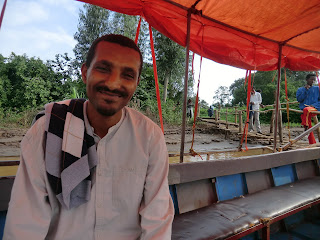
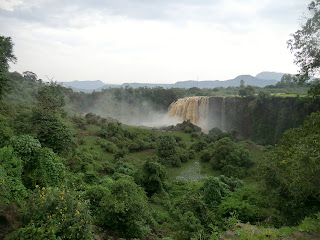
After getting the Blue Nile village and being harassed per usual by people wanting to give a tour, Netsanet & I walk off with 4 other Ethiopian tourists on the path to the falls. A few of these tour people were persistent as hell, and basically just followed us as we walked, so I relented. They guided us for about 30 minutes to the falls, which was mostly through grassy/swampy/marshy area and not really on any trail, stepping on small rocks half of the time to avoid the water. The hike to the falls included a quick traverse across the Nile in a dingy. The falls were incredibly beautiful, the scenery in general was a lush green and very mountainous. Luckily it is the rainy season here, which makes the falls much more impressive. On the way back, of course, even though we didn’t want them to guide us, they did, and I tipped them a whopping $2, which was actually too much by Ethiopian standards (the Ethiopians tipped even less). However, they are used to foreigners giving at least 5 or 6 dollars, so the guide made sure to complain, ask for more money, and tried to make me feel guilty. I didn’t buy his pitch.
A shot from the dingy:

Nester is laughing cause he can't swim!
The falls:

Beautiful:

The real fun began on the way back. Basically, we missed the last bus back to Bahir Dar at 530 by about 10 or 15 minutes and were thus stranded in this podunk town. We were walking along the main dirt road of the town trying to decide how to get home, when it began to rain. Then one of the four other Ethiopians (three girls and one guy) began to talk to me. She was a really beautiful girl from Addis Ababa and so she offered to share her umbrella with me and was being really friendly and talkative. When all of us went under the shelter of some tin can roadside shop to try to find out a solution on getting a ride home, she offered to sit at a table. Not being able to take a hint, I declined and instead proceeded to talk to 5 or 6 10-15 year old Ethiopian kids! Netsanet and his wife made fun of me a lot for this after. Actually anyways, it was quite entertaining talking to these kids cause they had pretty good English, and I was making some jokes, letting them wear my hat, and stuff like that, so they were also having fun. They liked to make Obama jokes. And then we practiced our Spanish/Chinese/Japanese/French/Swedish as the next hour passed while the others tried all possible ways to avoid having to be stranded for the night.
Beginning to rain on the towns main road:

New friends:

After failing to get a hitch with some Spanish tourists who had a rental vehicle, our last option was to pay a driver for a ride in the bus owned by the park. But not for cheap of course, since they were going out of their way to do this for us. The offer price was 250 apiece for Netsanet & I, which is around 15 dollars each. Consider that on the way there, we paid 13 birr each, less than a dollar! Netsanet had a friend in the town that he was thinking of calling, but I didn’t really feel like staying there (it was thunderstorming, the houses were made of sticks with tin roofs and dirt floors, and I was already a bit cold/wet). So I took their outrageous offer up. The 4 Ethiopians got the usual Ethiopian price of half or less of tourist price.
After driving about 10 minutes in this rickety bus, and with the sun setting, the driver passed a tuk-tuk that was broken down and so it stopped. There were 3 italian tourists inside. So we offered them to get in the bus and have a ride home. That began a huge 20 minute ordeal, though. There was a dad, a mom, and a son. And the mom was a real honest to god bargainer and screamer. The driver of the tuk-tuk was demanding 250 birr from the tourists, and they really only owed somewhere between 150 & 200 (like a measley 2 euro difference for these Italians). But the mom would not relent and pay 250, and a shouting match broke out. I think the dad was embarrassed for his wife. She was screaming and refusing to pay (which is good, he wanted to rip them off, but she was going nuts). Then, the 4 ethiopians in the bus were also going to charge the Italians 100 birr each to get on the bus, which was fair since we all paid a lot more than that in the first place to even get the bus. But the Italians argued like hell on that one too. Which is ridiculous, because basically they were stranded and doing them a favor by stopping in the first place. In reality, the truth is that the tuk-tuk driver could have been faking the break-down of his vehicle to rob the Italians. Sometimes a driver of these tuk-tuks will fake a breakdown, ask the passengers to get out to help push start the vehicle, then zoom off with all their possessions inside leaving them stranded. The Ethiopians knew that and wanted the Italians to get in the bus so they wouldn’t get robbed. But the tuk-tuk driver also jumped into the bus and wouldn’t get off until he got his money. One of the Ethiopian girls started screaming at him after awhile, and finally he got only 150 birr (which was about right), and actually she spit on him as he jumped out of the bus!
After all this, it had now become completely dark, the rain had stopped, but there was lightning to be seen in all directions and it seemed like a huge storm was coming. So the driver turned the interior lights off and it was time to head home on this bumpy, lightless road. But, 20 minutes later, we heard the screech of a cow, and then the bus abruptly stopped and engine shut off. The bus hit a cow! Two guys jumped out the door to analyze the situation. They looked underneath the bus, then the bus started up again, re-reversed over the cow to free it or something like that, then the driver quickly put it back in forward and the guys hopped in as the bus sped off, leaving the owner of the cow running and waving his walking stick at the bus. Cows are expensive and cost a lot of money, so I guess the driver sped off. But the owner can probably sue the driver if he finds him, and get a lot of money out of him, since the government is a big supporter of farmers.
An awesome adventure.
Stylish interior:

That's a bus on its last legs:

The pavement ceases:

Breakdown:

Nowhere:

Halfway through, there was a smell of petrol inside, the driver pulled up the cover on top of the shifter gear box to begin the investigation, and everyone piled out on the side of the road in the middle of nowhere with only a few horses and donkeys in sight. A seemingly regular occurrence, less than 10 minutes later, we piled back in and the bus rumbled onwards.
After getting the Blue Nile village and being harassed per usual by people wanting to give a tour, Netsanet & I walk off with 4 other Ethiopian tourists on the path to the falls. A few of these tour people were persistent as hell, and basically just followed us as we walked, so I relented. They guided us for about 30 minutes to the falls, which was mostly through grassy/swampy/marshy area and not really on any trail, stepping on small rocks half of the time to avoid the water. The hike to the falls included a quick traverse across the Nile in a dingy. The falls were incredibly beautiful, the scenery in general was a lush green and very mountainous. Luckily it is the rainy season here, which makes the falls much more impressive. On the way back, of course, even though we didn’t want them to guide us, they did, and I tipped them a whopping $2, which was actually too much by Ethiopian standards (the Ethiopians tipped even less). However, they are used to foreigners giving at least 5 or 6 dollars, so the guide made sure to complain, ask for more money, and tried to make me feel guilty. I didn’t buy his pitch.
A shot from the dingy:

Nester is laughing cause he can't swim!

The falls:

Beautiful:


The real fun began on the way back. Basically, we missed the last bus back to Bahir Dar at 530 by about 10 or 15 minutes and were thus stranded in this podunk town. We were walking along the main dirt road of the town trying to decide how to get home, when it began to rain. Then one of the four other Ethiopians (three girls and one guy) began to talk to me. She was a really beautiful girl from Addis Ababa and so she offered to share her umbrella with me and was being really friendly and talkative. When all of us went under the shelter of some tin can roadside shop to try to find out a solution on getting a ride home, she offered to sit at a table. Not being able to take a hint, I declined and instead proceeded to talk to 5 or 6 10-15 year old Ethiopian kids! Netsanet and his wife made fun of me a lot for this after. Actually anyways, it was quite entertaining talking to these kids cause they had pretty good English, and I was making some jokes, letting them wear my hat, and stuff like that, so they were also having fun. They liked to make Obama jokes. And then we practiced our Spanish/Chinese/Japanese/French/Swedish as the next hour passed while the others tried all possible ways to avoid having to be stranded for the night.
Beginning to rain on the towns main road:

New friends:

After failing to get a hitch with some Spanish tourists who had a rental vehicle, our last option was to pay a driver for a ride in the bus owned by the park. But not for cheap of course, since they were going out of their way to do this for us. The offer price was 250 apiece for Netsanet & I, which is around 15 dollars each. Consider that on the way there, we paid 13 birr each, less than a dollar! Netsanet had a friend in the town that he was thinking of calling, but I didn’t really feel like staying there (it was thunderstorming, the houses were made of sticks with tin roofs and dirt floors, and I was already a bit cold/wet). So I took their outrageous offer up. The 4 Ethiopians got the usual Ethiopian price of half or less of tourist price.
After driving about 10 minutes in this rickety bus, and with the sun setting, the driver passed a tuk-tuk that was broken down and so it stopped. There were 3 italian tourists inside. So we offered them to get in the bus and have a ride home. That began a huge 20 minute ordeal, though. There was a dad, a mom, and a son. And the mom was a real honest to god bargainer and screamer. The driver of the tuk-tuk was demanding 250 birr from the tourists, and they really only owed somewhere between 150 & 200 (like a measley 2 euro difference for these Italians). But the mom would not relent and pay 250, and a shouting match broke out. I think the dad was embarrassed for his wife. She was screaming and refusing to pay (which is good, he wanted to rip them off, but she was going nuts). Then, the 4 ethiopians in the bus were also going to charge the Italians 100 birr each to get on the bus, which was fair since we all paid a lot more than that in the first place to even get the bus. But the Italians argued like hell on that one too. Which is ridiculous, because basically they were stranded and doing them a favor by stopping in the first place. In reality, the truth is that the tuk-tuk driver could have been faking the break-down of his vehicle to rob the Italians. Sometimes a driver of these tuk-tuks will fake a breakdown, ask the passengers to get out to help push start the vehicle, then zoom off with all their possessions inside leaving them stranded. The Ethiopians knew that and wanted the Italians to get in the bus so they wouldn’t get robbed. But the tuk-tuk driver also jumped into the bus and wouldn’t get off until he got his money. One of the Ethiopian girls started screaming at him after awhile, and finally he got only 150 birr (which was about right), and actually she spit on him as he jumped out of the bus!
After all this, it had now become completely dark, the rain had stopped, but there was lightning to be seen in all directions and it seemed like a huge storm was coming. So the driver turned the interior lights off and it was time to head home on this bumpy, lightless road. But, 20 minutes later, we heard the screech of a cow, and then the bus abruptly stopped and engine shut off. The bus hit a cow! Two guys jumped out the door to analyze the situation. They looked underneath the bus, then the bus started up again, re-reversed over the cow to free it or something like that, then the driver quickly put it back in forward and the guys hopped in as the bus sped off, leaving the owner of the cow running and waving his walking stick at the bus. Cows are expensive and cost a lot of money, so I guess the driver sped off. But the owner can probably sue the driver if he finds him, and get a lot of money out of him, since the government is a big supporter of farmers.
An awesome adventure.
Tuesday, August 30, 2011
A toothbrush
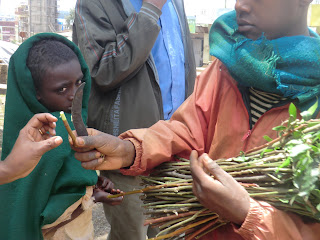
The bus stopped in a town on the journey from Addis Ababa to Bahir Dar. I bought a toothbrush from this little boy for 5 cents, which he cut to length on the spot and carved the bark off with his knife. Many people here clean their teeth with the end of this plant.



Monday, August 29, 2011
Women carrying things on their heads
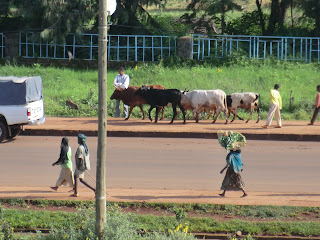
Here in Bahir Dar, Ethiopa, the women are quite admirable. STRONG people. The quantity and variety of things they are carrying on their heads is mind-boggling. Without a doubt, the Ethiopian women can probably give the men a nice ass kicking.




That is a lady who had to put her stuff down to re-adjust the baby on her back!

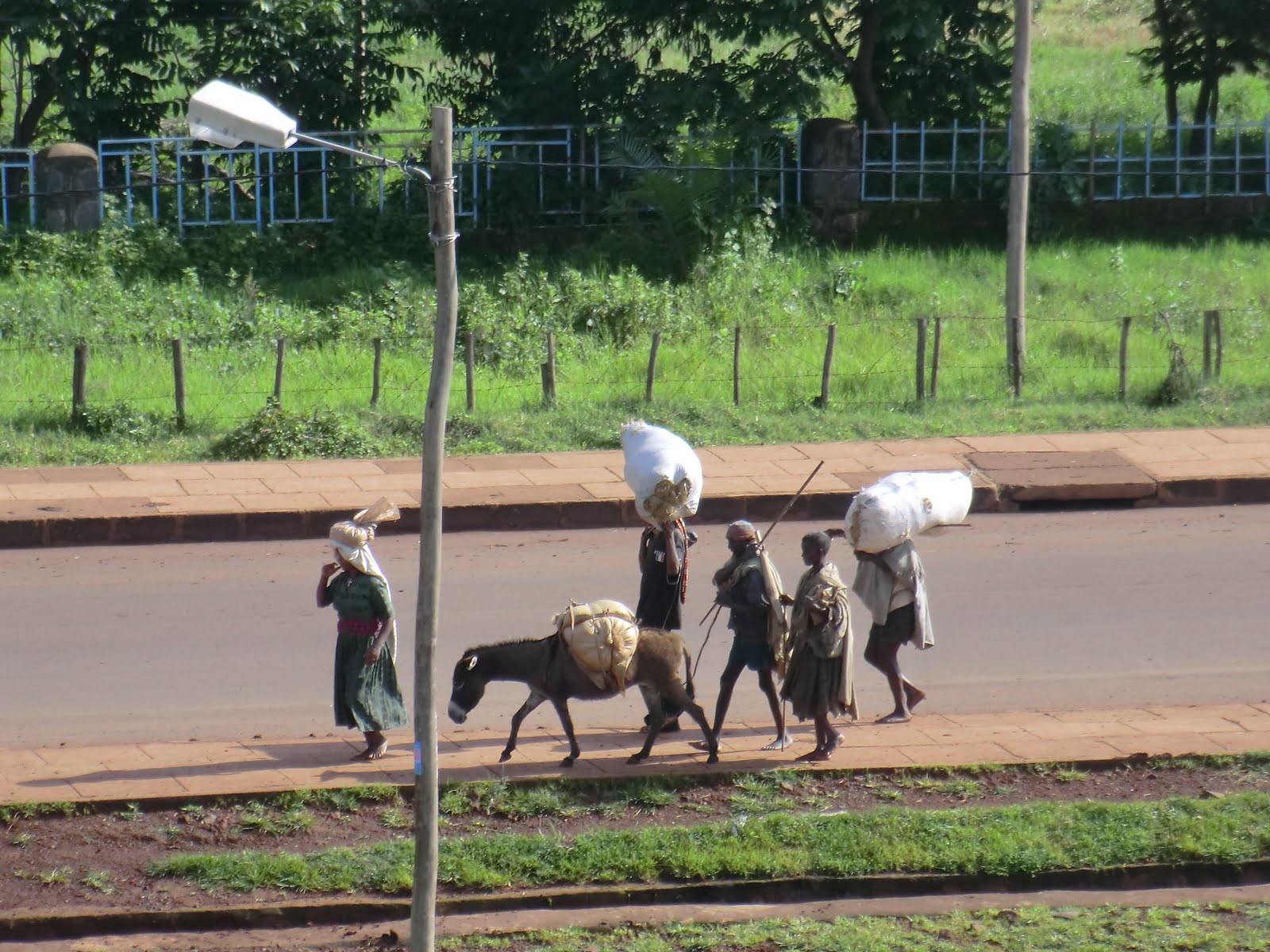


That is a lady who had to put her stuff down to re-adjust the baby on her back!

Subscribe to:
Posts (Atom)